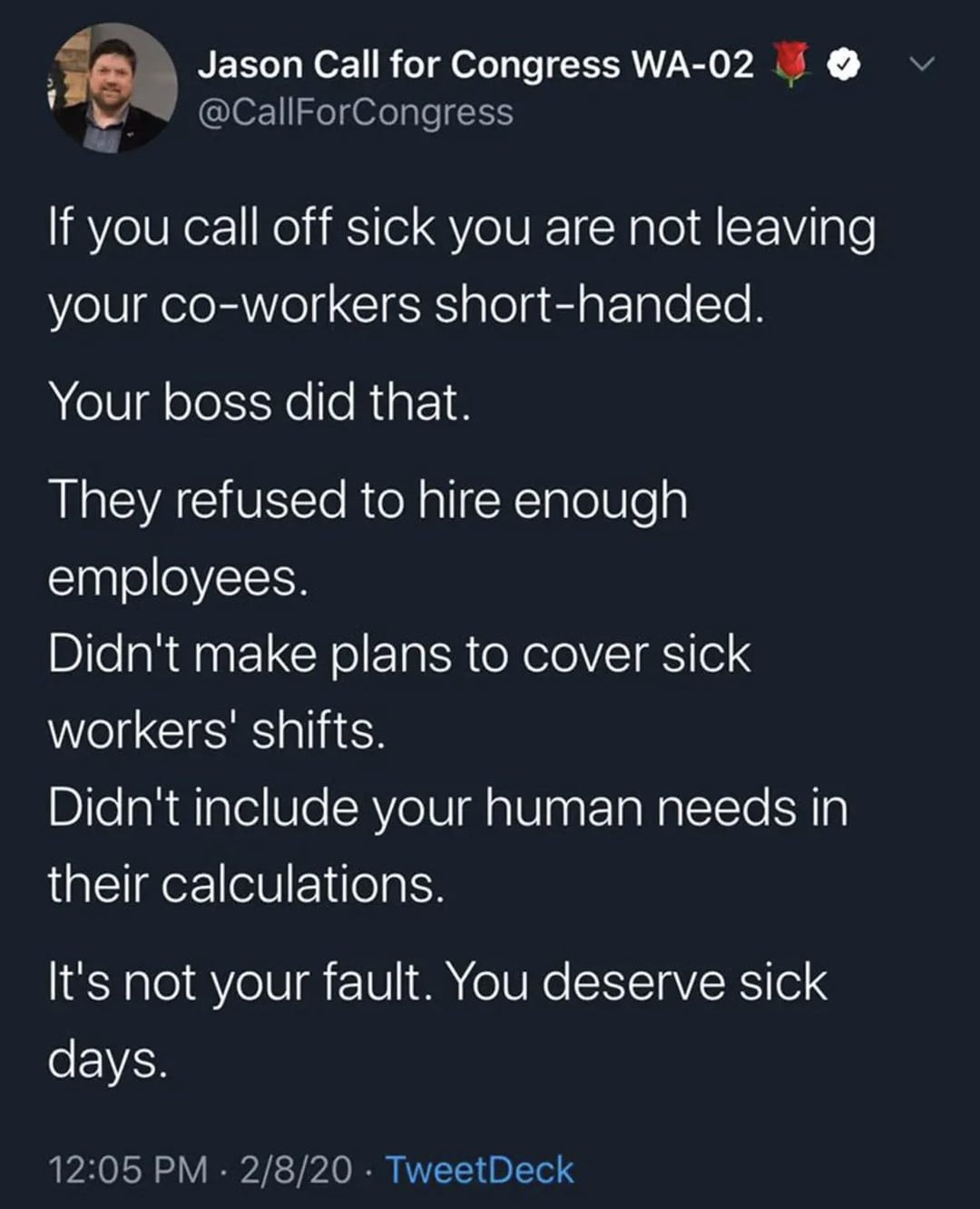
The only thing you do by keeping things running through heroic effort is to send a message to management that they can lower the priority of dealing with the issue.
Managing upwards (getting management to make decisions in your favor) means that you can’t let yourself be the reason they don’t feel the pain of a problem like poor staffing. Sure, you can step in and save the day if you really, truly, need to build up your reputation as dependable/hero, but it’s a thin thin line.
One thing I often do as well is try to look at people in other departments and their general attitudes towards time off, vacations, having to leave for Dr’s appointments, that sort of thing.
I’ll be damned if I’m going to live in a constant crunch time situation, feeling like I need to take lunch at my desk, and put off things I need to do for me.
Especially while other teams are having regular team building outings during work hours on the company dime, one guy takes a long lunch and to go to the gym, and two others were clearly taking the video call meeting while out walking their dog.
Everyone deserves consideration of the fact that they are human, and everyone deserves the kind of flexibility that often is only for business side “important” people.
Overtime solves this issue pretty effortlessly. They call you and offer a shift of overtime to cover someone that’s unexpectedly absent. If you’re willing to sacrifice your normal time off, you get time and a half in exchange. If you’re not, then either another person will or the manager/foreman on salary handles it. That is, after all, one of the reasons they’re paid more (and on salary.)
Huge note, IF you’re not salary. Most people in my circle are used to being asked for 60+ hours a week for the same check theyd get if they worked 10
In my opinion, at a healthy workplace, someone taking time off shouldn’t be noticed
In a “healthy” capitalist environment, they take note of who can leave without any bumps in the road and lay them off
I used to have this boss who would get mad if anyone asked for 2 weeks off. She would say, “if you think the business can survive without you for that long, why do we pay you? Don’t bother coming back then”
If i work 80 hour weeks for 50 weeks and 2 weeks of 0 hours… I still worked around 2x the amount i was supposed to. Firing that person for aomeone who works 40 hour weeks and never takes a vacation maybe looks better to management but is significantly less “commitment” or whatever

Too few people accept this
I once listened to a presentation by a guy who had this really elaborate plan, based on everyone doing their jobs absolutely perfectly, with nothing going wrong at all. If anything skipped a beat, anywhere along the way, the entire house of cards would come down.
I asked what would happen if someone didn’t accomplish their objectives, and he said they would. But what if they didn’t? They will. That’s when I said, you aren’t taking the human factor into account, and he said that the solution is to “fire the human, and get a new human.”
Meanwhile, “Nobody wants t’ werk!!!”.
Okay, cool. What happens while you’re training that new human? Trainees will operate at substantially less efficiency than expected while learning and may for a while afterwards too, depending on complexity of the work. What happens if one of those humans gets hurt or sick?
Dude really was a moron, wasn’t he?
This is so different industry by industry. Some can build in redundancy to cover employee leave yet still have something to do when everyone is healthy.
For many other companies, particularly in reference to hourly employees, having too many employees in the same position to cover call outs means scheduling gets diluted among them, which leads to lower earnings for all employees and higher turnover.
I pro worker and anti abusive management, but vague generalized posts like these feel disingenuous or at least not well thought out.
This kinda shit only gets written and spread by people who either have never been management or are really shitty management.
There’s way too many nuances to being a “good boss” to sum up in one dumb tweet.
My first impression is that a child wrote it.
Management or not, the older you are, the more opportunities you would have had to understand it’s more nuanced than that.
Labor market faces so many issues on both sides between overworked salaried employees, average and minimum wages not keeping up with inflation, decline in education standards putting out lower quality candidates, jobs shifting towards gig and independent contractor positions that punish independence, and so many things. This just comes off as a novice brat who didn’t like how they were made to feel.
The thing you’re doing right now is equivalent to explaining why giving people Saturday and Sunday off isn’t feasible in the current market before these were established in employment law.
There are a thousand reasons why four people might be doing the work of six and so can’t call out, but it’s really worth asking why are there only four people?
Unpopular opinion here: this is true for some jobs but the more responsibility you develop in your career the more unplanned absences will be noticed.
Yes, you “deserve” sick days as well as all the other supports employees are entitled to in a modern well managed organisation, but quite obviously if you do important stuff then on some days you just won’t be around to do those important things.
Like this guy Jason Call for example, I presume that if he’s elected is supposed to show up to congress and debate or vote on new legislation. How would you feel if he just didn’t do that because he was… you know… off sick? What if he was genuinely unwell a few times when important legislation was passed and then another occasion comes around and he feels like he’s coming down with something? He should just be able to take the day because his manager should have just hired more people right? No. Sometimes you’ve just got to grind it out.
There will be times in most professional jobs when taking a day off because you’re unwell is going to let the team down. In my experience, you tell the team what’s going on and see what can be done to reduce what’s required of you. For example if you’re meeting with an important client or whatever then maybe others can help with the prep and you show up late and leave early.
If your absence would break the company, then they need to be compensating you accordingly and have a backup plan.
I’ve worked heavily in the upper eschelons of BOH for nearly two decades now. I set very very clear boundaries. There are emergency protocols should shit break while i’m on leave.
Scheduled leave is a different proposition entirely.
I didn’t say someone’s absence would “break” a company, I’m really pointing out that if you have a lot of responsibility in your work then there will be days when your unplanned absence will effect team.
Sure, and you should be compensated appropriately for that responsibility.
And you should be able to take sick leave if you’re sick.
You seem to have completely missed my point.
Of course people are compensated for the roles they perform, and yes people are able to take sick leave.
My point is, most professionals will encounter situations where they don’t want to take a day off because there’s a big deadline or a meeting or something.
It’s not bad management it’s just the nature of having responsibilities and wanting to be good at what you do.
No ones missing the point. You’re ascribing a value we don’t hold.
If i’m too sick to work it doesn’t matter if there’s a big meeting or project. I’m too sick to work. End of.
I pretty much just don’t believe you.
Anyone with significant responsibility will consider the consequences of their not being present when they take leave. As I said in another comment, if this Jason Call guy got elected and just didn’t show up for an important vote in congress because he had the sniffles, would that be appropriate?
If there are protocols for others to follow that describe what you would do if you were present, then with the greatest respect I don’t think you have very much responsibility.
Mmm. That sounds like a you problem.
For someone with an .au account you seem remarkably ill informed as to workers rights in a functioning country, or the concept of boundaries.
Btw, last time i took annual leave it was a grand total of four hours before my phone started blowing up. I referred my employer to the protocols I’d written and left them.
There’s also a real limit to how many staff a given schedule can support. You don’t hire people that don’t have any work that they’re needed to perform.
Put yourself in the shoes of that example person. You were hired but as long as everyone else is healthy and functional, you’re always superfluous. Your hours will be cut repeatedly to avoid wasting labor costs, but you’ll still be expected to be available. If you’re instead on call, you will be expected to be available for all days you agreed to be on call for - you can’t work a different job or get wrapped up in personal things that you can’t set down or pause.
There’s a difference between a full staff and a skeleton crew staff. But in both cases, a sudden unplanned absence like illness or injury will require someone to work extra hours or the business will have to do without that person. A fully staffed property, like a hotel for example, might have two desk agents that typically work together for the same shift to ensure customers never have to wait too long for service. The job can be done with just one person, at cost of customer experience, and that’s what you’ll see from places running a skeleton crew.
What you won’t see, however, is there being a third staff member who is there purely to cover for one of the other two. That’s already handled by the supervisor (if one exists) or manager.
In those cases they’re supposed to hire the full staff and schedule them all. Scheduling only the bare minimum of people every day is a recent phenomenon.
Please read what I wrote.
Please elaborate
I literally explained it to you in the post you originally replied to.
A fully staffed property doesn’t mean that they can cover unplanned absences without either someone else taking on extra hours or less work being done.
You don’t hire people that you don’t need, and I provided real world examples of why few people would ever want to be hired as a “just in case” staff member.
I didn’t think it was that complicated. What needs to be further explained?
In the 1990s and 2000s, employers would just have more people show up than needed most days. We used to have “easy” days sometimes when there was more employees than work.
The whole calling people on their day off thing used to be rare, and it’s absurd that saying no is now counted against you. What we consider fully staffed today has shifted considerably.
Yeah. Being stuck at work, nothing to do, just waiting for the time to clock out and go home.
It’s fucking miserable. Those days suck. You get to think of all the shit you’d rather be doing than staring at walls or lazily scrubbing floors you already scrubbed twice already just to look busy. It’s shitty for staff morale and it’s even worse for budget efficiency. No one likes feeling unimportant or unneeded.
And besides, how the fuck you think a company is gonna survive if it’s wasting money on unnecessary staff? Even with a redistribution of wealth from the worthless c-suite back down to people who work for a living, the company still has to be profitable in order to be able to pay those wages and salaries, in order to be able to increase those wages and salaries for cost of living and inflation and merit based raises.
You don’t become profitable by wasting money.
I would like to add - fuck those managers that try to make scheduling issues around your sick days your problem. Over the last few years, I’ve heard of more and more jobs where the manager expects you, the sick person, to find coverage for your shift in order to call out. That is, you’re expected to call around your coworkers and find someone who will work your shift for you… yes, even if you’ve got no voice or are busy puking your brains out. Somehow, this practice has become prevalent in some jobs in the US. I worry about the younger workers who accept this as normal. It is not normal, and should never be normal!
The manager is paid to manage the employees - including finding coverage when someone’s sick. If you ever find yourself in a job where a manager tries to make you find your replacement before “permitting” you to call out, GTFO out of there! It’s a fucked up practice and sane employers don’t pull that shit.
(For all the Europeans reading - yes, this is real. Yes, we need better labor laws.)
gtfo and maybe start a couple fires on your way to the door
Labor conditions in the USA are so fucked up. Join a union, you need collective action to make changes.
I’m a school bus driver in the US (Teamsters union). Our monthly dues are about $90 and we’re finding it difficult to get new drivers to join because of that. Our district is surrounded by non-unionized districts where they make about $8 less an hour and get none of the benefits we get, which include subsidized health insurance and a pension after ten years. We’re OK for now but if our union membership ever drops below 50% of the drivers our contract will be voided and then we’ll find out how shitty it is to not be represented by a union. But I can’t get the new drivers to understand this; the anti-union propaganda for the last fifty years hear (really, for a lot longer than that) has just been too overwhelming.
They make $8 more per hour, but are getting hung up on $90/month union dues? They do know that the difference alone would pay for that in like 12 hours, right?
I dunno if school bus drivers are public workers or not… If they are, the Supreme Court ruled a few years back that they don’t even need to pay full dues, even if they are part of the collective bargaining unit and are receiving all of the benefits of contract that was fully negotiated by the union.
It’s annoying, but it’s there. If they’re public employees, they don’t even need to pay full dues