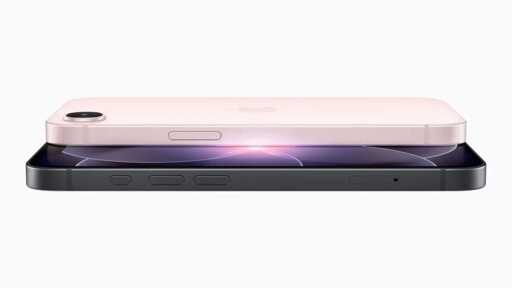
The new iPhone 17 model supports Apple’s AI tools, features faster wireless charging, and includes the new C1X modem developed by the company’s silicon team.
If you were to provide concrete proof that these devices that are currently on sale are vulnerable, then we could have a discussion about that https://consumer.huawei.com/en/phones/
The xiaomi 15 ultra that was released in February of last year and still in current production and offered new (and at new prices!) uses the explicitly claimed as brute forceable qualcomm snapdragon 8 elite.
You asked for huawei though, and their most recent stuff like the mate 80 pro and whatnot runs the kirin 9xxx chips. Kirin chips have historically been considered pretty trash security wise, but a lot of that is from people’s experiences with the three digit families of soc from 2020 and before. they’re supposed to be getting better since the 8xxx and 9xxx series. Still, the 2025 leak table 2 states “Huawei (Kirin/Qualcomm/MTK)” are partly brute forceable in cold state and fully brute forceable in hot state. Considering the 8xxx and 9xxx chips had been out last year at the time of the tables publication and the way that pixel devices are treated in that same table (big red “not supported” X mark actually means sometimes it’s supported depending on the precise version and what you’re trying to accomplish) I think it’s safe to say that by 2025 there was compromise on the 8xxx or 9xxx Kirin chips out there at that time.
Which would of course encompass the x6 and p60s listed in huaweis current lineup.
Remember though that I’m not claiming these leaks represent the extent of le capability today, but the extent of their capability then. Over time we can expect (and can see based n the expansion of their claims and the capabilities asserted in their leaks over time!) that they would get access to new methods of compromising phones, we just can’t know the exact extent until something leaks.
Again, I am trying to show an evidence based analysis as opposed to the one you’re suggesting that relies on assumptions. There’s nothing wrong with the way you’re looking at the world, but when actual evidence is present those ideas have to be examined and maybe even changed to accurately reflect the reality we see.
Phone security analysis with Chinese characteristics lol.
I think it’s safe to say that by 2025 there was compromise on the 8xxx or 9xxx Kirin chips out there at that time.
No, it’s not to safe that at all. You’re making a really wild jump here. It’s like saying that if old version of chips iPhone uses were vulnerable we could say that current ones are. You are firmly into speculation territory here. I don’t know why it’s so hard for you to just admit that your thesis is not supported by evidence.
Remember though that I’m not claiming these leaks represent the extent of le capability today, but the extent of their capability then. Over time we can expect (and can see based n the expansion of their claims and the capabilities asserted in their leaks over time!) that they would get access to new methods of compromising phones, we just can’t know the exact extent until something leaks.
Except this equally applies to American phones, and in addition to that, there is a risk of intentional backdoors. So, to reiterate for the tenth time now, American phones are just as likely to be vulnerable to malicious attackers, and on top of that they are produced by companies directly working with US and Israel making it likely they would have intentional backdoors. That’s a strictly worse scenario.
Again, the evidence speaks directly against your analysis. You’re trying to contort the evidence here to fit your narrative instead of looking at it objectively.
Phone security with burgerland characterisitcs lol.


The xiaomi 15 ultra that was released in February of last year and still in current production and offered new (and at new prices!) uses the explicitly claimed as brute forceable qualcomm snapdragon 8 elite.
You asked for huawei though, and their most recent stuff like the mate 80 pro and whatnot runs the kirin 9xxx chips. Kirin chips have historically been considered pretty trash security wise, but a lot of that is from people’s experiences with the three digit families of soc from 2020 and before. they’re supposed to be getting better since the 8xxx and 9xxx series. Still, the 2025 leak table 2 states “Huawei (Kirin/Qualcomm/MTK)” are partly brute forceable in cold state and fully brute forceable in hot state. Considering the 8xxx and 9xxx chips had been out last year at the time of the tables publication and the way that pixel devices are treated in that same table (big red “not supported” X mark actually means sometimes it’s supported depending on the precise version and what you’re trying to accomplish) I think it’s safe to say that by 2025 there was compromise on the 8xxx or 9xxx Kirin chips out there at that time.
Which would of course encompass the x6 and p60s listed in huaweis current lineup.
Remember though that I’m not claiming these leaks represent the extent of le capability today, but the extent of their capability then. Over time we can expect (and can see based n the expansion of their claims and the capabilities asserted in their leaks over time!) that they would get access to new methods of compromising phones, we just can’t know the exact extent until something leaks.
Again, I am trying to show an evidence based analysis as opposed to the one you’re suggesting that relies on assumptions. There’s nothing wrong with the way you’re looking at the world, but when actual evidence is present those ideas have to be examined and maybe even changed to accurately reflect the reality we see.
Phone security analysis with Chinese characteristics lol.
No, it’s not to safe that at all. You’re making a really wild jump here. It’s like saying that if old version of chips iPhone uses were vulnerable we could say that current ones are. You are firmly into speculation territory here. I don’t know why it’s so hard for you to just admit that your thesis is not supported by evidence.
Except this equally applies to American phones, and in addition to that, there is a risk of intentional backdoors. So, to reiterate for the tenth time now, American phones are just as likely to be vulnerable to malicious attackers, and on top of that they are produced by companies directly working with US and Israel making it likely they would have intentional backdoors. That’s a strictly worse scenario.
Again, the evidence speaks directly against your analysis. You’re trying to contort the evidence here to fit your narrative instead of looking at it objectively.
Phone security with burgerland characterisitcs lol.